India is set to revolutionize its cruise tourism with the introduction of 51 new cruise circuits across 14 states and 3 Union Territories by 2027. This ambitious plan under the Cruise Bharat Mission aims to transform India’s inland and river cruise tourism sector, drawing notable investments and operators like Viking Cruises, ensuring India’s place as a key player in global cruise tourism.
Overview of the Cruise Bharat Mission
The Cruise Bharat Mission, conceptualized and spearheaded by the government, aims to transform India’s cruise tourism landscape. This ambitious initiative seeks to turn India into a significant hub for global cruise tourism by capitalizing on its extensive coastline and scenic inland waterways. At the core of this mission is the development of 51 new cruise circuits. These circuits are meticulously planned to cover both coastal and riverine areas, linking prominent cities and captivating hidden gems of natural and cultural heritage.
The Union government’s commitment to the Cruise Bharat Mission involves substantial investment in infrastructure development. This development isn’t limited to ports and terminals; it extends to navigational aids, safety protocols, and environmental protection measures. Ports like Mumbai, Kochi, and Chennai are already witnessing extensive upgrades to accommodate an increasing number of cruise ships with state-of-the-art docking facilities. These transformations are essential for meeting international standards and ensuring safety, efficiency, and sustainability.
Collective efforts are pivotal for the mission’s success, necessitating collaboration with state governments and Union Territories. Each state contributes its unique heritage and tourist attractions, creating a diverse portfolio that appeals to both domestic and international travelers. This collaborative approach allows for a more personalized and localized cruising experience, benefiting regional economies and communities by creating jobs and promoting local crafts and cuisines.
The Cruise Bharat Mission represents a significant shift in India’s tourism strategy, aiming to diversify the country’s tourist offerings beyond the traditional. With an array of 51 new cruise circuits, the initiative intends to showcase India’s varied geography and rich cultural tapestry. The circuits are carefully designed to cover diverse landscapes, from the serene backwaters of Kerala to the vibrant beaches of Goa, the grand palaces of Rajasthan, and the stunning Sundarbans of West Bengal.
The economic implications of this mission are vast. Establishing India as a cruise tourism hub not only promises increased tourist footfall but also boosts ancillary businesses such as hospitality, transport, and local catering services. Cruise visitors contribute significantly to local economies; they spend money on excursions, dining, and shopping, all of which stimulate economic growth and development.
The mission also aligns with broader national economic goals. By enhancing tourist experiences and expanding cruise tourism, India can spur job creation across various sectors, including shipping, tourism, and hospitality. This aligns with the government’s larger objectives of job creation, infrastructure modernization, and service sector expansion, all of which are key to sustainable economic development.
Strategically, the mission capitalizes on India’s geographical advantages. India’s location at the heart of major global shipping routes makes it ideally positioned to attract cruise lines looking for exotic and diverse itineraries. The country’s unique historical and cultural attractions, combined with pristine natural beauty, provide perfect conditions for this burgeoning industry. Moreover, the development of river cruises enhances the appeal by offering an intimate exploration of India’s heartland, showcasing the diverse lifestyles along the Ganges, Brahmaputra, and other major rivers.
Another significant aspect of the Cruise Bharat Mission is sustainability. As cruise tourism develops, it is imperative to balance growth with environmental preservation. Initiatives such as using advanced waste management systems, reducing emissions, and promoting eco-friendly practices aboard cruise ships are integral to this mission.
The Union government plays an instrumental role in policy formulation and coordination. By enacting progressive policies and regulatory frameworks, the government ensures a conducive environment for the private sector to invest and participate in the industry’s growth. Incentives for investment in cruise ships, reduction in GST rates for cruise operations, and streamlining of visa processes for international tourists are some steps taken to boost the sector’s appeal. These policy measures create a favorable environment for international cruise companies to enter the Indian market and collaborate with local enterprises.
Overall, the Cruise Bharat Mission is a testament to India’s growing ambition and capability in the global tourism sector. As the mission unfolds, it is expected not only to attract significant international attention but also to present India as a premier destination for cruise tourism. By systematically integrating infrastructure development, policy support, and sustainability practices, the mission sets a firm foundation for a vibrant and prosperous cruise tourism industry in India.
Moreover, these efforts resonate with the larger vision of integrating technology and innovation into India’s tourism sector, ensuring the Cruise Bharat Mission is not only about expanding physical routes but also enhancing digital connectivity. This holistic approach lays the groundwork for a seamless cruise experience, encouraging repeat visits and fostering long-term growth for India’s tourism economy.
Viking Cruises in India
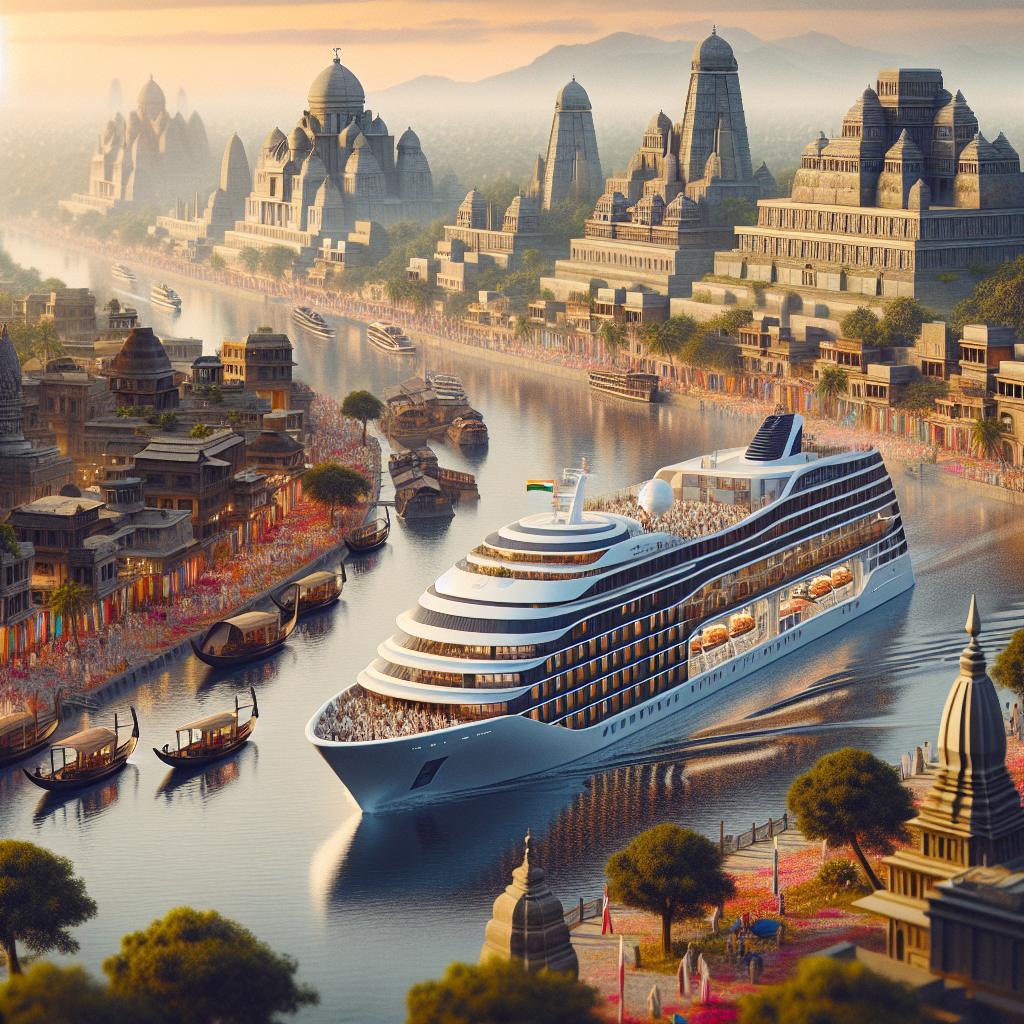
The strategic entry of Viking Cruises into the Indian market with the inaugural vessel designed for the Brahmaputra River unveils a new era in the cruise tourism industry. This move underscores the growing international interest in exploring India’s extensive and diverse river systems. The Brahmaputra, being one of the most significant waterways in India, is a logical choice for such an entry point, offering both cultural richness and natural beauty.
Viking Cruises stands as a prominent name in the global cruise industry. The decision to sail the Brahmaputra is a testament to the river’s appeal and its untapped potential in enriching tourist experiences. India’s rivers don’t just offer scenic landscapes; they tell the stories of ancient civilizations and harbor diverse ecosystems. The arrival of Viking Cruises on the Brahmaputra highlights these offerings, drawing attention from international travelers who seek authentic cultural experiences.
India’s waterways have often been overshadowed by the ocean voyages, but rivers are increasingly being recognized for their unique value propositions. This shift points to a more sustainable form of tourism. River cruises, unlike ocean tours, provide a closer connection to land, allowing tourists to explore small ports, interact with local communities, and delve deep into local cultures. This deeper connection has the potential to redefine tourist experiences, moving from mere sightseeing to cultural immersion.
The economic impact of the Viking Brahmaputra cannot be overstated. Such initiatives contribute significantly to local economies by creating jobs, promoting businesses, and laying the groundwork for further development in tourism infrastructure. Local craftsmen, guides, and service providers benefit directly, thus strengthening economic resilience in the region. Furthermore, this venture helps to position India as an enticing destination in the global river cruise map, attracting more players in the field, and fostering competitive improvements.
The vessel designed for the Brahmaputra showcases impeccable specifications tailored for a magnificent yet challenging river. It is crafted to navigate the complexities of India’s waterway, striking a balance between capacity, comfort, and maneuverability. With features like luxurious accommodations, fine dining areas, and observation decks, the cruise promises an unparalleled travel experience. While ensuring passenger comfort, the ship’s design incorporates sustainability, minimizing its environmental footprint, an ethos Viking Cruises is known to uphold.
Operating on the Brahmaputra River enhances the reach of India’s tourism efforts under the broader Cruise Bharat Mission. This aligns with the plan to expand the tourism circuits, offering tourists a wider variety of transit experiences beyond traditional pathways. The integration of guided tours, regional performances, and culinary experiences on board and onshore create a composite package that appeals to varied international and domestic travelers.
Tourists traversing the Brahmaputra onboard such a vessel derive multiple benefits. They gain access to the biodiversity that the river supports, the rich tapestry of traditions of the states it flows through, and the stunning land-and-river-scapes that are unique to this part of India. Layered with the expertise Viking Cruises brings, these experiences are curated to enrich understanding and appreciation of the Indian subcontinent’s diverse culture.
This venture goes beyond the travel journey; it plays an ideological role. By establishing a formidable presence on the Brahmaputra, it reinforces the belief in harnessing natural assets for progressive and sustainable tourism opportunities. This initiative encourages other international and local cruise operators to consider India’s rivers as viable and attractive routes for future cruise endeavors.
Strategically, Viking’s decision to invest in the Brahmaputra resonates with India’s commitment to revamp and utilize its inland waterways, an aspect covered extensively in governmental missions and plans. With emerging interest from international players, there is an impetus to expedite infrastructural developments on these routes, creating a positive cycle of growth and interest. Enhancements in terminal facilities, dredging, and navigation systems are critical components supported by such initiatives.
The ripple effects of Viking’s entry extend to advancing regional economic frameworks. It empowers local communities by providing a platform for traditional industries to thrive. Local artisans, culinary experts, and cultural performers gain new audiences, amplifying their reach and enhancing livelihood opportunities. Socially and economically, the cruise sector’s engagement provides hope for the transformation of the less commercialized regions into vibrant economic zones.
With the participation of international players like Viking Cruises, the global perspective on India as a river cruise destination is shifting, amplifying its reputation as a site of historical wonder rather than just a land of ancient temples and bustling cities. Viking Cruises’ example could create opportunities for synergistic collaborations, such as joint ventures with local cruise operators, melding global standards with regional peculiarities to present truly unique offerings.
In essence, while other parts of the tourism sector struggle with privacy and cybersecurity concerns highlighted in articles such as Secure Your Website: Tips and Best Practices, the river cruise industry offers a distinctive edge. It champions personalized, secure, and enriching experiences that are coveted by global travelers.
Such strategic entries can inspire better utilization of India’s abundant natural resources—its rivers—leveraging them to build an economically and culturally robust environment. It signifies not just growth in numbers for the cruise sector but a qualitative leap in tourism offerings. This not only garners interest from international travelers but also sets benchmarks for local tourism enterprises to aspire to, fostering an all-rounded development of the Indian cruise tourism industry.
Current and Future Developments
The burgeoning growth of India’s cruise tourism sector is a testament to the country’s strategic focus on harnessing its vast riverine and coastal resources. Over the past few years, India has witnessed a significant upsurge in the interest and investment in its cruise tourism industry, notably the river cruises. This growth reflects a calculated response to the global demand for immersive and culturally rich travel experiences. The sector is experiencing a productive expansion from a small fleet of vessels to a well-connected network, indicating tremendous potential for future development.
The rise in popularity of river cruise voyages represents a pivotal shift from traditional maritime tourism. River cruises offer a unique opportunity to explore the heart of India by navigating its scenic rivers, which are rich in historical and cultural landmarks. This not only caters to luxury travel connoisseurs but also captivates travelers with an interest in the authentic and undiscovered aspects of India. As highlighted in the previous chapter, interest from prominent global cruise operators, such as Viking Cruises’ entry into India, underscores the growing international appeal of Indian river systems.
This burgeoning interest has prompted strategic efforts aimed at developing infrastructure tailored to the cruise industry. The Inland Waterways Authority of India (IWAI) plays a crucial role in propelling this growth. The authority is spearheading the transformation of key river ports into state-of-the-art cruise terminals, making them capable of handling the diverse needs of both domestic and international cruise operators. These initiatives include enhancing port facilities with passenger lounges, immigration checkpoints, and refueling stations to ensure seamless operations. Such enhancements are integral to providing a comprehensive traveler experience, contributing significantly to the sector’s appeal.
As a part of its commitment to expanding cruise tourism, IWAI has initiated numerous projects focused on upgrading essential infrastructure across India’s principal rivers. The goal is to render rivers like the Ganges, Brahmaputra, and Godavari navigable for larger cruise vessels. This facilitates access to previously unreachable areas and allows tourists to experience India’s cultural and natural diversity. These efforts ensure that the cruise tourism sector doesn’t merely remain an element of niche tourism but transforms into a major magnet for tourism-driven economic growth.
Future projects include the development of dedicated cruise corridors and advanced navigational systems. These corridors will be equipped with cutting-edge technology to provide real-time data on water levels, weather conditions, and safe navigation routes. These advancements are critical to addressing the operational challenges posed by variable river conditions and ensuring the safety of passengers and vessels alike. In addition to technical growth, there is also a strong emphasis on the creation of eco-friendly cruise terminals which focus on sustainability. Such facilities aim to minimize the environmental impact of increased tourism activity, aligning with global trends towards sustainable travel.
Furthermore, the landscape of India’s cruise sector is poised for dynamic transition as regional governments also play a pivotal role in advocating for cruise tourism. Through subsidies, policy frameworks, and public-private partnerships, states are actively contributing to creating a viable ecosystem for cruise operators. This joint effort between national and regional authorities is expected to draw in substantial investments from domestic and international stakeholders, thereby amplifying the sector’s growth trajectory.
Backed by these developments, India’s cruise industry is forecasted to transform into a more accessible and appealing option for a global audience. The modernization plans encompass not only physical infrastructure but also a digital transformation. Investment in digital solutions, including booking platforms and virtual tours, enhances the traveler experience by offering convenience and a glimpse of what they can expect on their journey. The promise of technological integration is evident in the proposed solutions to avoid over-reliance on traditional marketing, which can sometimes be limiting.
Additionally, the concept of developing a cruise network includes plans for a collaborative approach across India’s tourism ecosystem. Such an approach emphasizes collaboration with local communities to offer authentic experiences through curated city tours, cultural events, and culinary explorations. These initiatives focus on leveraging cultural tourism and aligning with India’s vision of transforming its rivers into bustling waterways that encapsulate the vibrant life along their banks.
Overall, India’s cruise sector is on the cusp of an exciting phase, supported by expansive infrastructure enhancements, strategic foreign investments, and a dedicated pursuit towards sustainability. Encouragement from government policies fosters an environment conducive to uninterrupted growth, promising not only economic benefits but also enriching cultural exchanges between India and the world. These initiatives are vital, alongside railway and highway expansions, creating a multi-modal transportation network that is both efficient and environmentally responsible.
The ripple effect of these developments will likely be seen in various sectors, from hospitality to local artisans, who stand to benefit from increased tourist traffic. As operators and stakeholders recognize the potential of India’s waterways, the nation is positioned to become a leading player in the international cruise tourism landscape. The stage is set for India to embrace its rivers not only as historic lifelines but as thriving avenues for global tourism. This expansion aligns with broader trends in the tourism sector, integrating cutting-edge technology and reflecting evolving traveler expectations. Explore more on these transformative projects at the intersection of technology and tourism.
Final words
India’s strategic expansion in cruise tourism, with 51 new circuits by 2027, promises heightened investment and global attention. With the entry of Viking Cruises, complemented by local developments in cruise infrastructure, India establishes itself as a dynamic market in the global cruise tourism landscape. This initiative not only exemplifies growth but also heralds a new era of travel offerings.