The Himalayas offer some of the world’s most spectacular trekking experiences, from dramatic mountain valleys to remote high passes surrounded by snow-covered peaks. But traveling at high altitude is very different from an ordinary mountain vacation.
As elevation increases, the air contains less available oxygen, and your body needs time to adapt. Proper preparation, gradual acclimatization, sensible pacing, and the right equipment can make the difference between an unforgettable Himalayan adventure and a trip cut short by altitude-related problems.
Here’s how to prepare before heading to a Himalayan trek or high pass.
Understand the Challenges of High Altitude
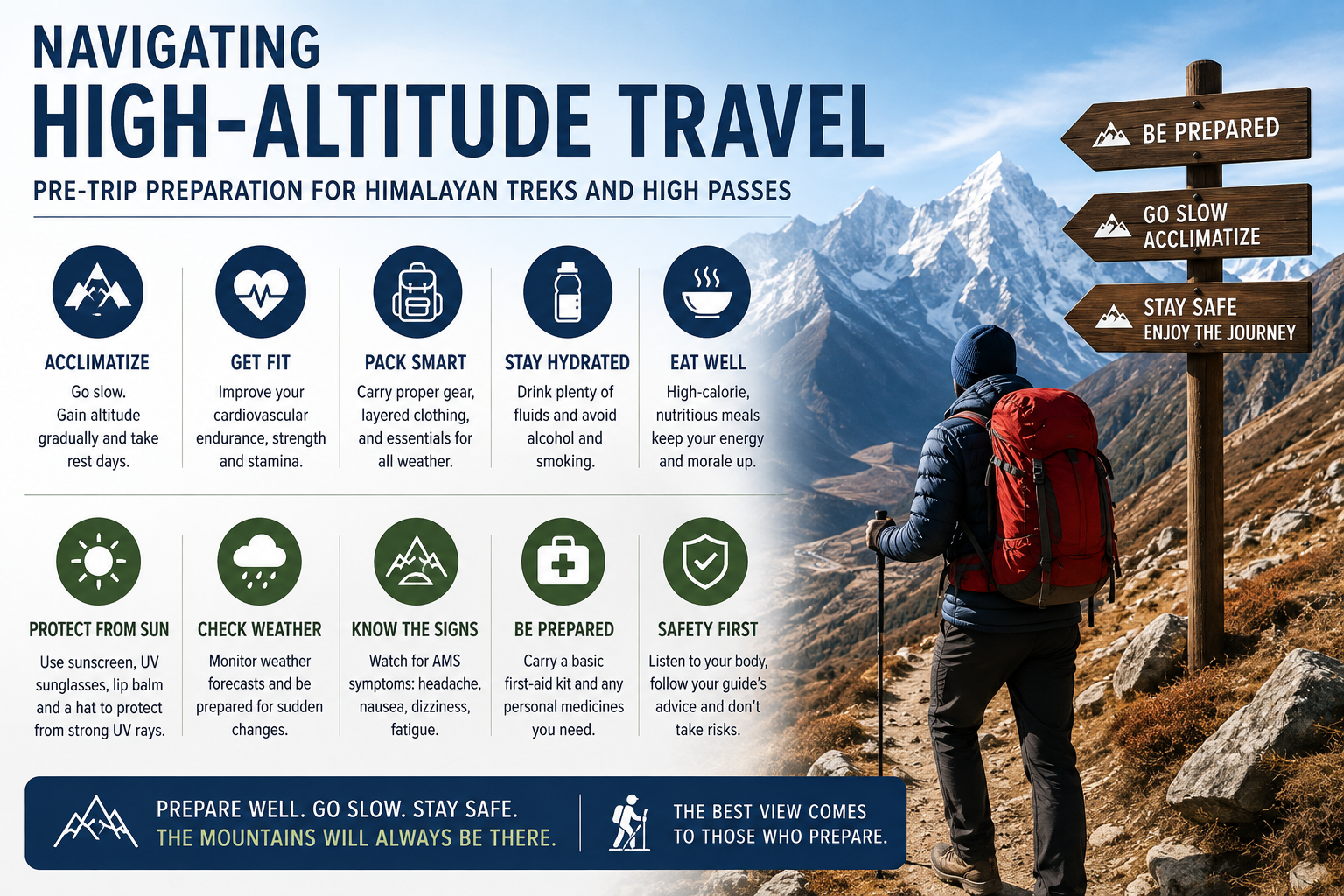
Altitude-related problems can occur when you ascend too quickly. The risk generally becomes more significant above approximately 2,500 meters (8,200 feet).
Common symptoms of mild altitude sickness can include:
- Headache
- Dizziness
- Fatigue
- Nausea
- Reduced appetite
- Difficulty sleeping
- Shortness of breath during exertion
Don’t assume that being physically fit makes you immune. Even experienced athletes can experience altitude problems if they ascend too quickly.
Plan Your Acclimatization Properly
Acclimatization is one of the most important parts of high-altitude travel.
Rather than rushing directly to a high pass, build elevation gradually and allow your body time to adapt.
A sensible itinerary should include:
- Gradual elevation gains
- Rest or acclimatization days
- Moderate trekking distances
- Avoiding rapid jumps in sleeping altitude
- Extra time for unexpected weather or fatigue
Never treat acclimatization days as wasted vacation time. They can make the rest of the trek substantially more comfortable.
Choose the Right Trek for Your Experience
Not every Himalayan trek requires the same level of preparation.
Before choosing a route, evaluate:
- Maximum elevation
- Highest overnight sleeping altitude
- Total trekking distance
- Number of consecutive trekking days
- Terrain difficulty
- Weather conditions
- Availability of accommodation and emergency support
Beginners should consider lower-altitude routes before attempting demanding high-pass crossings.
Train Before Your Trip
High-altitude trekking combines endurance, strength, balance, and long hours of walking.
Start training several weeks before departure.
Focus on Cardiovascular Fitness
Include activities such as:
- Brisk walking
- Hiking
- Cycling
- Stair climbing
- Jogging
Gradually increase the duration rather than trying to build endurance in a few intense sessions.
Strengthen Your Legs
Squats, lunges, step-ups, and calf exercises can help prepare your legs for steep climbs and descents.
Don’t forget your core, as it helps with balance when carrying a backpack over uneven terrain.
Practice Walking With Your Backpack
A lightweight daypack may feel easy at home but considerably heavier after several hours of climbing.
Before the trek, practice walking with the equipment you’ll actually carry.
This helps you determine:
- Whether your backpack fits properly
- How much weight you can comfortably manage
- Whether your footwear causes hot spots
- Which items are unnecessary
The goal is efficient packing rather than maximum packing.
Pack for Rapidly Changing Weather
Himalayan weather can change quickly, particularly at higher elevations.
Your packing list should generally include:
- Moisture-wicking base layers
- Warm insulating layer
- Waterproof and windproof outer shell
- Trekking trousers
- Warm gloves
- Wool or thermal socks
- Sun hat
- Warm cap
- Sunglasses with strong UV protection
- Sunscreen and lip protection
- Sturdy trekking shoes
- Headlamp
- Water bottles or hydration system
- Personal first-aid supplies
For winter or particularly high routes, specialized equipment may also be required.
Protect Yourself From the Sun
UV exposure becomes especially intense at altitude. Snow can reflect sunlight, increasing exposure further.
Use:
- High-SPF sunscreen
- UV-protective sunglasses
- A hat or cap
- Lip balm with sun protection
Reapply sunscreen regularly, especially during long trekking days.
Stay Hydrated
Cold mountain air and physical exertion can make it easy to overlook hydration.
Drink regularly throughout the day instead of waiting until you’re extremely thirsty.
However, don’t force excessive amounts of water. Your hydration needs vary according to exertion, weather, and individual circumstances.
Consider carrying a reliable water purification method, especially when trekking through remote areas.
Don’t Ignore Early Altitude Symptoms
One of the biggest mistakes trekkers make is assuming that symptoms will simply disappear if they keep going.
If you develop symptoms that could indicate altitude sickness, tell your guide or trekking companions.
The basic rule is:
Don’t ascend when you’re feeling significantly worse at altitude.
If symptoms become severe or neurological or breathing problems develop, descent and urgent medical assistance may be necessary.
Eat for Energy
High-altitude trekking can burn substantial energy.
Prioritize meals containing:
- Complex carbohydrates
- Protein
- Healthy fats
- Fruits and vegetables
- Adequate fluids
Carbohydrate-rich foods can be particularly useful during strenuous trekking because they provide readily available energy.
Carry convenient snacks such as nuts, dried fruit, energy bars, or other foods that you can eat during breaks.
Sleep Can Be Difficult
Sleeping at altitude can be challenging, particularly during the first few nights.
Don’t panic if your sleep isn’t perfect immediately.
A comfortable sleeping system can help:
- Warm sleeping bag appropriate for the expected temperature
- Thermal layers
- Comfortable sleeping pad
- Earplugs if staying in shared accommodation
- Proper hydration during the day
Avoid relying on alcohol as a way to fall asleep at altitude.
Check Your Gear Before Leaving
Never test essential trekking equipment for the first time on the mountain.
Before departure:
- Break in your trekking shoes
- Test your backpack
- Check your sleeping bag
- Test your headlamp
- Inspect trekking poles
- Confirm your waterproof layers
- Check batteries and power banks
A small gear problem at home can become a major inconvenience several days into a remote trek.
Build a Weather Buffer Into Your Itinerary
Mountain weather doesn’t always follow your schedule.
Flights, roads, trails, and high passes can be affected by:
- Snow
- Heavy rain
- Strong winds
- Landslides
- Poor visibility
- Extreme cold
Avoid planning your international flight home immediately after the final trekking day. A buffer day or two can protect your schedule from unexpected delays.
Travel With an Experienced Guide When Appropriate
For remote or technically demanding routes, an experienced local guide can be invaluable.
A knowledgeable guide can help with:
- Route decisions
- Weather changes
- Acclimatization
- Local logistics
- Emergency situations
- Accommodation
- Communication
For challenging high passes, traveling with a reputable trekking operator can provide an additional layer of safety and logistical support.
Know When to Turn Around
Reaching the summit or crossing a high pass isn’t more important than getting home safely.
Be prepared to change your plans if:
- Weather deteriorates
- You develop significant altitude symptoms
- The trail becomes unsafe
- Your pace is becoming unsustainable
- A guide recommends descending
A successful Himalayan adventure isn’t measured only by reaching the highest point. Knowing when to turn back is part of good mountain judgment.
Final Thoughts
High-altitude Himalayan travel rewards preparation. The breathtaking landscapes may be the reason you start planning the journey, but careful acclimatization, physical conditioning, appropriate equipment, hydration, weather awareness, and a flexible itinerary are what help you enjoy it safely.
Don’t rush the mountains. Give your body time to adapt, respect changing conditions, listen to experienced guides, and always prioritize your well-being over completing a particular route.
With the right preparation, your Himalayan trek can become an extraordinary experience—one defined by spectacular scenery, personal achievement, and memories that last long after you’ve returned home.